Hair loss & scalp health · Fort Collins, Colorado
Hair Loss Treatment in Fort Collins, Rooted in Science and Whole-Body Health
“Your genetics are the gun. Your lifestyle and environment pull the trigger.”
Clinical trichology and advanced hair restoration with Amy Gray. Hair loss is often an outward expression of what is happening internally, so nothing is recommended until we know what is driving yours.
What are you noticing?
Pick the one that sounds most like you.Shedding and thinning are not the same thing
Sudden shedding often follows something that happened two to four months earlier — illness, a stressful season, a change in medication, a drop in iron or protein. It behaves very differently from gradual thinning, and it is usually the more reversible of the two.
- Density count
- Shed pattern
- Timeline of the last 12 months
- Nutrient intake
A widening part is a density change, not a hair-fall change
When the part widens, individual follicles are usually producing finer, shorter hairs than they used to. Under magnification that miniaturization is visible long before it is obvious in the mirror — which is exactly when there is most to work with.
- Miniaturization
- Follicular units per square centimeter
- Pattern distribution
- Hormonal timeline
The scalp is skin, and it can be treated like skin
Itching, tightness and flaking point to the scalp environment itself — inflammation, sebum balance, buildup around the follicle opening. This is often the most fixable part of the picture, and leaving it untreated undermines anything else you try.
- Redness and inflammation
- Sebum levels
- Follicle congestion
- Products currently in use
Products can only work on the problem they were made for
Most over-the-counter hair products target one mechanism. If yours is a different one, the product was never going to work — and the year spent testing it is the real cost. Knowing which mechanism you are dealing with is what makes the next purchase the right one.
- What you’ve already tried
- Scalp imaging
- Internal contributors
- What to stop doing
Bring the products you have been using. Knowing what has already been tried, and what it was aimed at, is half the picture.
Book a scalp evaluation If coverage is the goalWhat clients say
Before anything else
A trichologist is to your hair and scalp what a dermatologist is to the skin on your face.
A specialist in one thing. Trained to examine, measure and treat the hair and scalp — not a physician, and not trying to be. If what we find needs a doctor, you will be told to see one, and told why.
Realign. Restore. Reclaim.
Reclaim your health. Reclaim your confidence. Reclaim your zeal for life.
One appointment, then a process. Everything that follows is built on what that first hour actually found — which is the whole difference.
Realign
One clinical scalp evaluation, sixty minutes, realigning the plan with what is actually happening. Density, miniaturization, inflammation, sebum and buildup — measured under magnification, not guessed at.
Restore
Where the scalp findings point inward, the work moves to the internal conditions hair growth depends on — nutrition, stress load, sleep and recovery.
Reclaim
The findings become a plan you can follow — scalp protocols here in the studio, and the internal work through the Core to Crown Transformation. Where a restoration option fits, it is offered because the findings support it, not because it is what we sell.

Useful whether or not you ever book
Four things you can check yourself this week
None of this needs an appointment and none of it costs anything. The point is not to diagnose yourself — it is to have something written down now, so that in three months you are comparing two records instead of two memories.
Shedding range: American Academy of Dermatology, “Do you have hair loss or hair shedding?” · Two-to-four-month lag and trigger list: DermNet, “Telogen effluvium”.
What none of this can tell you is why. Density, miniaturization, inflammation and sebum are not things you can see in a mirror at any resolution — and the distance between knowing something changed and knowing what changed is the entire reason the evaluation exists.
In one study of 178 postmenopausal women, 52.2% had female pattern hair loss — and 73.2% of those were at the earliest, least advanced grade.
Which is the part worth knowing. It is common, and most of it is caught while there is still a great deal to work with.
Chaikittisilpa S, Rattanasirisin N, Panchaprateep R, et al. Prevalence of female pattern hair loss in postmenopausal women: a cross-sectional study. Menopause 2022;29(4):415–420. Conducted in Thailand; not a US prevalence figure.If it looks fine to everyone else, that does not mean nothing is happening
You know your own parting, your own ponytail, the weight of your hair when it is wet. You will almost always know first — which is why being told you look fine is not reassurance. It is a slower instrument, not a better one.
The starting point
The Core & Crown Scalp Evaluation
Sixty minutes, measuring the things that change before anything is visible in the mirror — then measured again, the same way, so you can see whether it is working.
- Microscopic scalp analysis The magnified look at the follicle itself — the part of the appointment nothing else replaces.
- Density Follicular units per square centimeter, in the same marked zones each visit.
- Miniaturization What proportion of hairs are thinning rather than falling — the earliest signal there is.
- Shed pattern Where it is happening, and whether the pattern points inward or to the scalp itself.
- Scalp condition Inflammation, sebum balance, buildup around the follicle opening.
- The last twelve months Health, stress, medication, nutrition — the timeline that usually explains the rest.
You leave with the numbers
A digital file of everything that was measured — nothing printed, nothing to lose — so the next appointment can be compared against this one. Any product recommendation comes after that, once the findings are in front of you.
The numbers are yours. Take them anywhere you like — but you will not get them anywhere else in Fort Collins.
When restoration is not an option
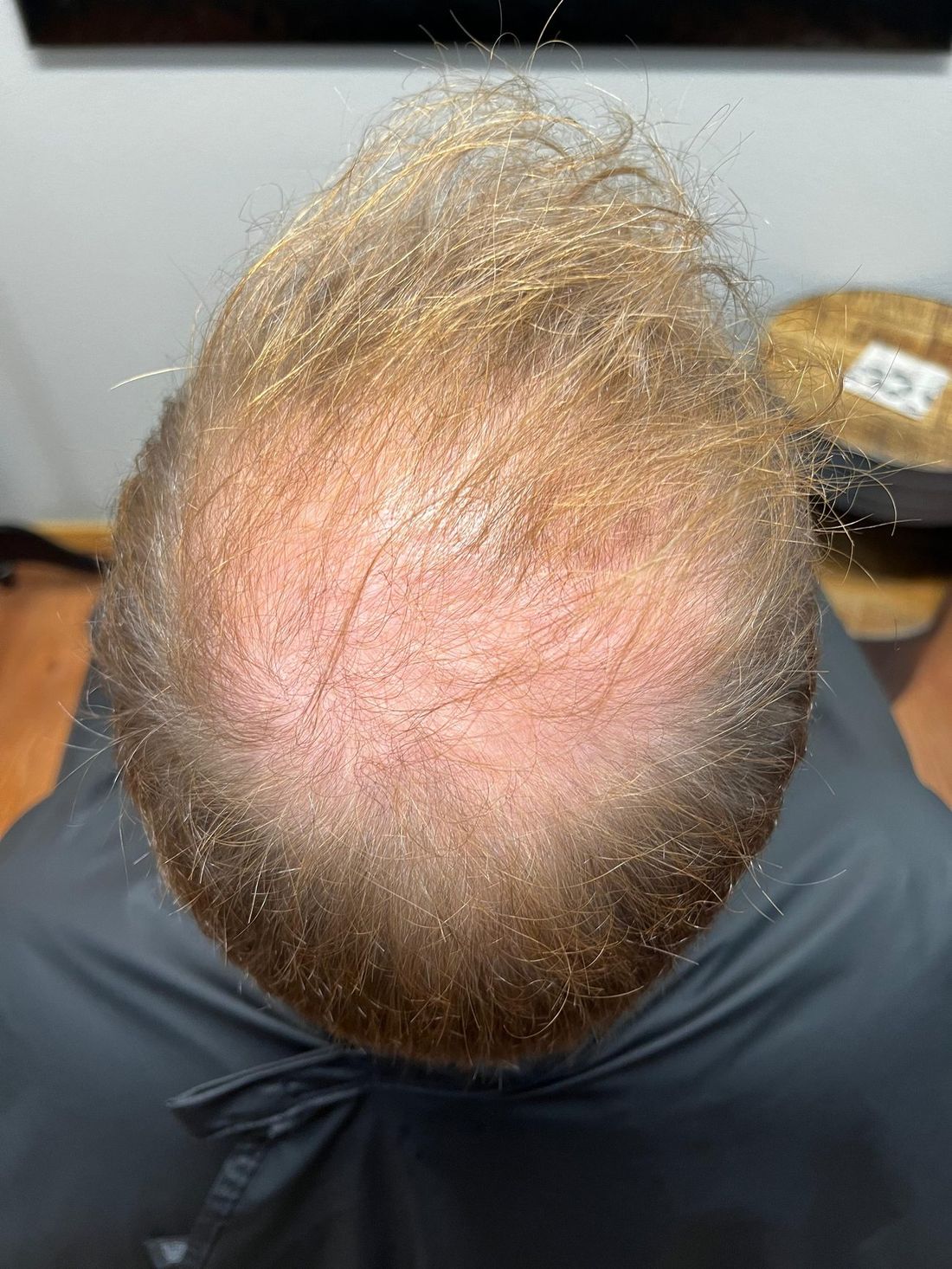
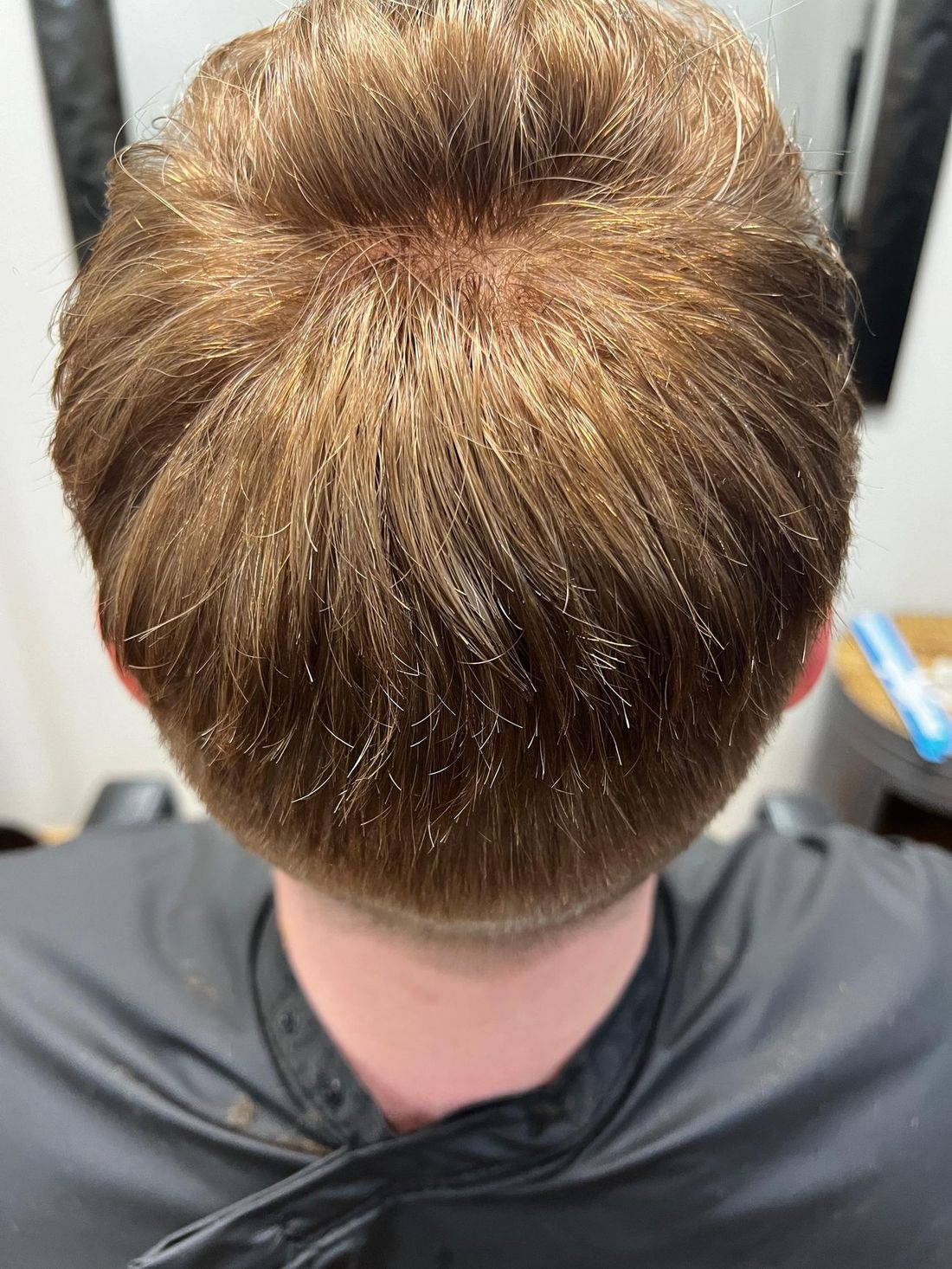
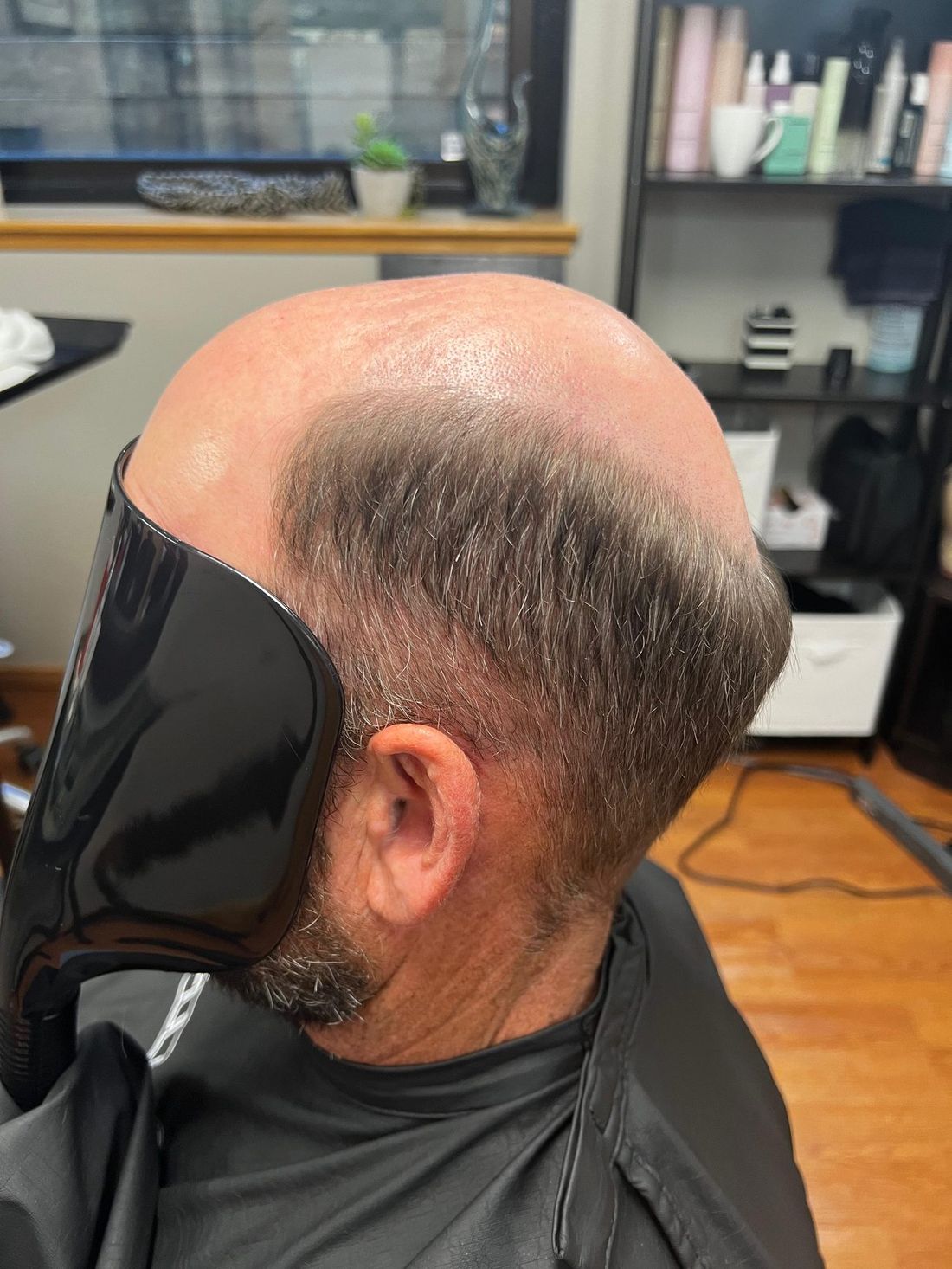
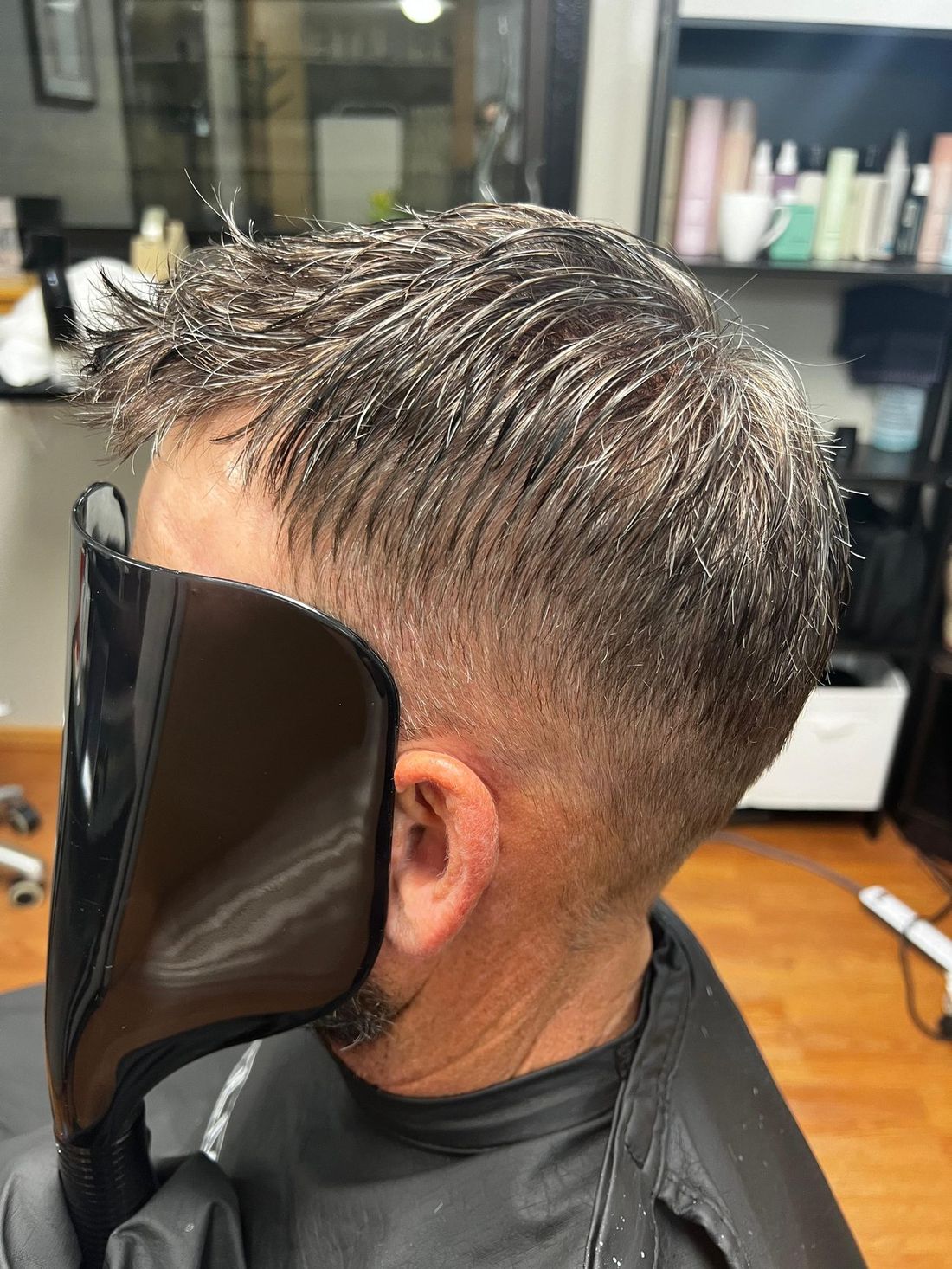
What hair replacement looks like in one appointment
Not everyone arrives early, and not every kind of loss comes back. Where coverage is the goal instead, this is what it looks like — a custom system built to the shape of the scalp it sits on. Hair replacement, and never sold as regrowth.
Not local?
You do not have to live in Fort Collins
“I don’t want someone’s location to determine whether I can help them.”
The Core to Crown Transformation is the same whole-person work — nutrition, stress, sleep, environment — delivered virtually, anywhere in the country, through the Core & Crown app. It is the internal half of the picture, and it is the part no topical product reaches.
Everywhere else, the answer arrives before the question
Fort Collins has good providers. What it does not have is a first step.
What we do
Hair loss treatment here starts with the evaluation, and everything below follows from it. You are never asked to choose a treatment before anyone has looked.
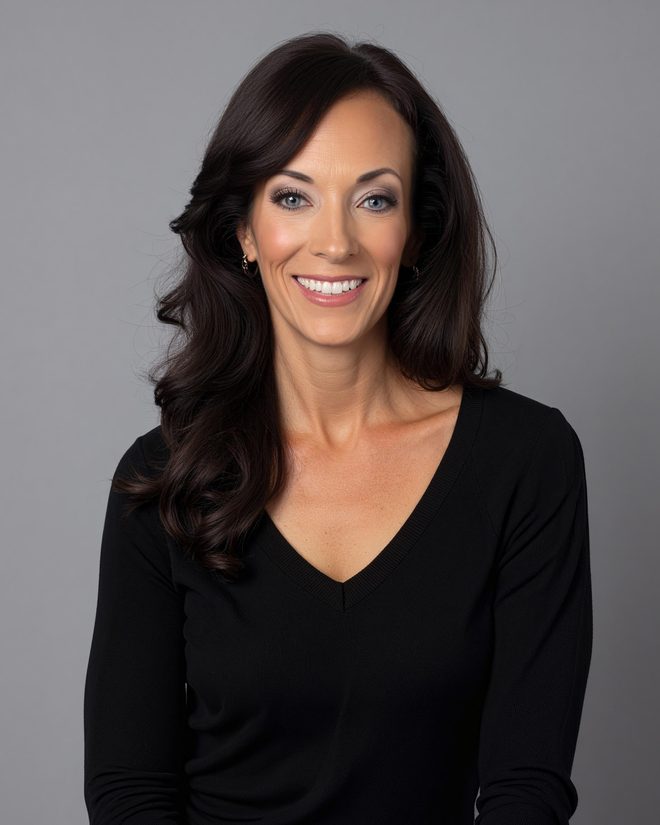
Amy Gray
Aligned from Within
“I don’t want to simply sell treatments or products. I want to help people understand what may be contributing to their hair loss, give them the tools to improve the things they can control, and provide advanced restoration options when they’re needed.”
That is possible because Amy is not only a trichologist. She is also a certified nutrition coach, a personal trainer and a Pilates instructor, so the internal half of the picture never gets handed off to somebody else.
- Clinical Trichologist, 2019 — United States Trichology Institute
- Hair Loss Practitioner, 2017 · Associate Trichologist, 2018 — USTI
- Bauman Medical Certified Hair Coach
- Licensed cosmetologist since 1995 · behind the chair in Northern Colorado since 1999
- NASM Certified Nutrition Coach · NASM Certified Personal Trainer
- Balanced Body Pilates — Reformer and Mat · CoreAlign in progress · TPI Fitness Level 2
- Advanced hair replacement training — CRLab, HairSkeen, HairUWear, International Hair Goods
- Integrative Health Practitioner Level 1 — Integrative Health Practitioner Institute
- Featured in The Link, the professional publication of the American Hair Loss Council
Straight answers
What people believe about hair loss, and what is actually true
It comes from your mother’s father.
Pattern hair loss is influenced by genes from both sides, and genetics is only part of it. What you inherit sets the possibility; what happens in your life often decides the timing.
Shedding a lot of hair means you are going bald.
They are different processes. Shedding is whole hairs leaving faster than usual, and it commonly tapers back once whatever triggered it has passed. Thinning is the hairs growing back finer and shorter each cycle, which does not settle on its own. Plenty of people have both at once, which is why the two get confused.
Washing your hair less will save it.
Hair that was going to shed sheds either way — washing less just collects it. Meanwhile buildup around the follicle opening makes the scalp environment worse, not better.
If the bloodwork is normal, there is nothing to find.
Normal ranges are wide, and a result inside the range is not the same as a result that is optimal for hair growth. The scalp itself also goes unexamined in most bloodwork-only investigations.
Before you book
What actually happens in the evaluation?
About an hour. Magnified imaging of the scalp, a density and pattern assessment, and a structured conversation about the last six to twelve months — health, stress, medication changes, what you have already tried. You leave with the findings in a digital file and a plan you can act on, whether or not you do it here.Do I have to buy a treatment afterward?
No. The evaluation is a standalone appointment and plenty of people take the findings and go elsewhere with them. If a treatment here fits, it will be recommended and priced clearly; if it does not, you will be told that too.Is a trichologist the same as a dermatologist?
No, and the two are not in competition. A trichologist is a trained specialist in hair and scalp who assesses, images and treats non-medically. A dermatologist is a physician who can diagnose disease and prescribe. If findings suggest something that needs a doctor, you will be told to see one.Do you work with men?
Yes. Pattern loss, recession and full loss are all handled here, including CRLab CNC systems, which use permanent attachment rather than daily wear and are worn through work and exercise. Appointments are private.Do you work with people going through chemotherapy?
Yes, and with children and teenagers experiencing alopecia or medical hair loss. Those appointments are scheduled with extra time and full privacy.Stop guessing
Appointments are limited each week so that every evaluation gets the time it needs.